Did you happen to have hot weather in late May? In Italy it was not so bad: 35-36 degrees. In France we reached highs of 38 degrees (Paris went 14 degrees above the seasonal average), in Spain 42. Then we were informed that we could take a breather thanks to the loosening of the subtropical anticyclone, with a 10-degree nosedive and more. And it happened: the weather on the short term is very rarely wrong. The problem is that we have learned the language of weather but not the language of climate, and we tend to confuse the two planes, creating a major cognitive problem: we know we need to prepare to close the umbrella and open the air conditioning, but we go no further. We fail to understand how to organize an energy and social system that optimizes spending, reduces casualties and sustains the economy. Doing so is possible, but only if what science tells us is not censored, in the Trump fashion.
Now for example, the latest news is that theWorld Meteorological Organization (WMO ) is sounding the alarm: El Niño is coming. To be exact, there is an 80 percent chance that this climate phenomenon will form by August, with associated record-breaking temperatures. And immediately comes the first interpretive problem: Is El Niño weather or climate? An event that has always happened or a consequence of the climate crisis we have created? It is actually both. If we consult the universal source of digital information, at the click, this explanation emerges: “El Niño-Southern Oscillation is a periodic climatic phenomenon that causes strong warming of the surface waters of the Central-Southern and Eastern Pacific Ocean in December and January on average every five years, with a statistically variable period between three and seven years.”
So it would seem that El Niño is a natural, periodic phenomenon, a series of events that have marked our history for centuries. And in part it is. But that is not the most important part. The most important part is what the Ipcc, the Intergovernmental Panel on Climate Science, that is, the grouping of thousands of scientists that processes research on behalf of the United Nations, tells us.
Before reading what the Ipcc says, a premise must be made: this is official information, and in order to move from the scientific realm to dissemination, it must gain the consensus of everyone, including governments that balance their budgets by selling fossil fuels and thus have every interest in trying to mute climate alarm. Despite all these cautions imposed by U.N. diplomacy, the Ipcc says that “El Niño-induced droughts of 2015-2016, partially attributable to human influence, have caused severe food insecurity in several regions, including eastern and southern Africa and the Central American Dry Corridor.” Which means that by burning oil, coal, gas and deforesting we have turned a phenomenon that was natural into an amplified threat. And that’s not enough, there is more to the voluminous Ipcc reports. Since we have not only created a masochistic energy system, but persist in the error, it will get worse: “It is very likely that El Niño-Southern Oscillation-related precipitation variability will be amplified by the second half of the 21st century.”
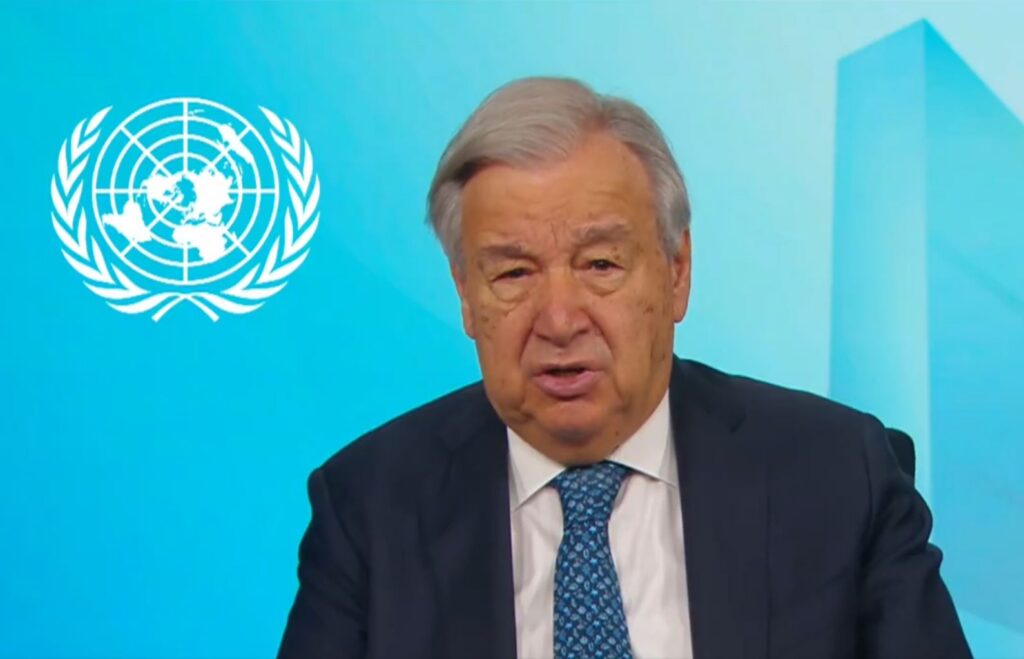
Further amplified by the second half of the century, but already clearly visible now. What worries the United Nations is the combination of El Niño’s return and already soaring temperatures. UN Secretary-General António Guterres has made it clear: El Niño “will pour fuel on the fire of a world that is already overheating.” For the next three months, the Omm warns, unusually high temperatures are expected in almost every region of the Planet.
Some experts are not ruling out a “super El Niño” scenario, the most extreme on the scale. Making the prediction more ominous is the comparison with the recent past: the 2023-2024 biennium episode was already one of the five most intense ever recorded in El Niño history, and was a major contributor to making 2024 the hottest year ever globally.
So far science, which, despite the systematic dismantling of scientific information on the subject implemented by the White House, continues to make its voice strongly heard. Now the ball is in the court of governments, which have two powerful weapons in their hands to defend the safety of their citizens. The first is to accelerate the energy transition to lower climate risk, bills and dependence on supplier-reactors (mitigate the climate crisis). The second is to enact climate security plans to lessen the health and economic impact of the climate crisis (adapt). Those who fail to do so will take responsibility for driving up the cost of bills and the death toll.