In 1961 each inhabitant of the Earth consumed an average of 25 kilograms of meat per year. By 2022, the figure has risen to 47 kilograms. It is an indicator that shows a profound transformation in the way humanity feeds, breeds, occupies land and consumes the Planet’s resources. The FAO report released in recent days reconstructs this bulimia in the Planet’s consumption with an overwhelming amount of data.
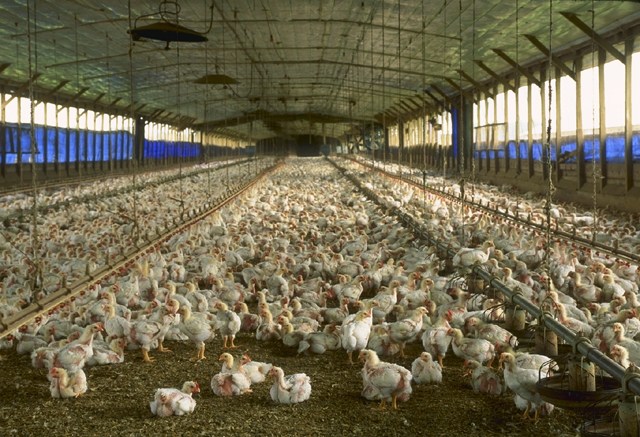
Calculating the population increase, we go from doubling per capita to quadrupling meat production. And if we go into detail, the numbers grow further. Each person in the world now eats six times as much poultry as in 1961 (it has gone from less than 3 kilograms per capita to 17 kilograms in 2022). Twice as much pork (we are up to 15 kilos per capita). By contrast, beef consumption is stable, at around 9 kilos per person. These data are not only about consumption habits: they tell of a production model that has devastated the Planet by accelerating the climate crisis, the drying up of soils, and drought.
Those who eat too much and those who eat too little
Not everyone bears the same responsibility. In high-income countries, per capita meat consumption has reached levels that many scientific researches consider excessive even for human health, as well as for that of the environment. And only recently have there been increasing signs of attention to the negative effects of this trend: from health effects to animal welfare to ecological balances. In some areas-such as Canada and the European Union-there is beginning to be a slowdown or stagnation in total per capita consumption.
At the opposite pole, in the low-income regions of sub-Saharan Africa or South Asia, access to animal protein remains limited and marked by severe social inequalities. The problem is not only productive: insufficient cold chains, weak trading systems and loss of food at the distribution stage create substantial problems.
The gap between excess and shortage is thus more than ever at the heart of the contradictions in the global food system.
The climate shadow that the report is silent about
The thorniest knot in the report, however, is not what it says, but what it does not say. The FAO has acknowledged that rich countries are driving excessive consumption of animal products. It has documented the industry’s growth trajectory. It has highlighted the resulting environmental damage. Yet it made no explicit recommendation to reduce meat consumption. And this shortcoming has not gone unnoticed.
Cleo Verkuijl, senior researcher at the Stockholm Environment Institute, which has been criticizing FAO’s omissions on this issue for years, said the report documents the problem well but does not draw the logical conclusions that the data would require. In the past, researchers and scientists have accused the organization of underestimating the climate benefits of reducing meat consumption or giving in to pressure from the livestock industry.
Certainly FAO’s mandate is related to food security, and the organization has historically focused on the effort to ensure sufficient food for all. But today the concept of security is increasingly linked to environmental and climate balances that are at increasing risk, and addressing problems separately does not help solve them. FAO has announced a second report, due by the end of 2026, that will focus more specifically on environmental issues; we’ll see what it says.
But something very clear has long been said by theIpcc, the UN climate task force. The livestock sector, according to Ipcc estimates, is a major contributor to global greenhouse gas emissions: agriculture and land management together account for between 20 percent and 25 percent of total emissions, with livestock farming being the largest component. Beef is by far the most impactful (accounting for more than 35 percent of total livestock sector emissions), but the growth of chicken and pork farms is certainly not insignificant. Livestock farming is also responsible for a significant share of emissions of methane, a gas that warms the atmosphere much faster than CO2, and di-nitrous oxide, which is even more potent.
What countries can do, what consumers can do
There is no shortage of ways out of this trap, at least in theory. On the institutional level, governments in high-income countries could introduce fiscal policies to internalize the environmental costs of meat production, redirect agricultural subsidies toward more sustainable systems, and invest in infrastructure to reduce waste along the supply chain. On the research front, the development of alternative proteins–plant-based, fermented, lab-grown–offers real prospects, although the timing of large-scale adoption remains uncertain.
On the individual level, the science is clear: reducing red and processed meat consumption, favoring plant-based proteins and limiting white meat portions is both a healthy choice for people and healthy for the Planet.