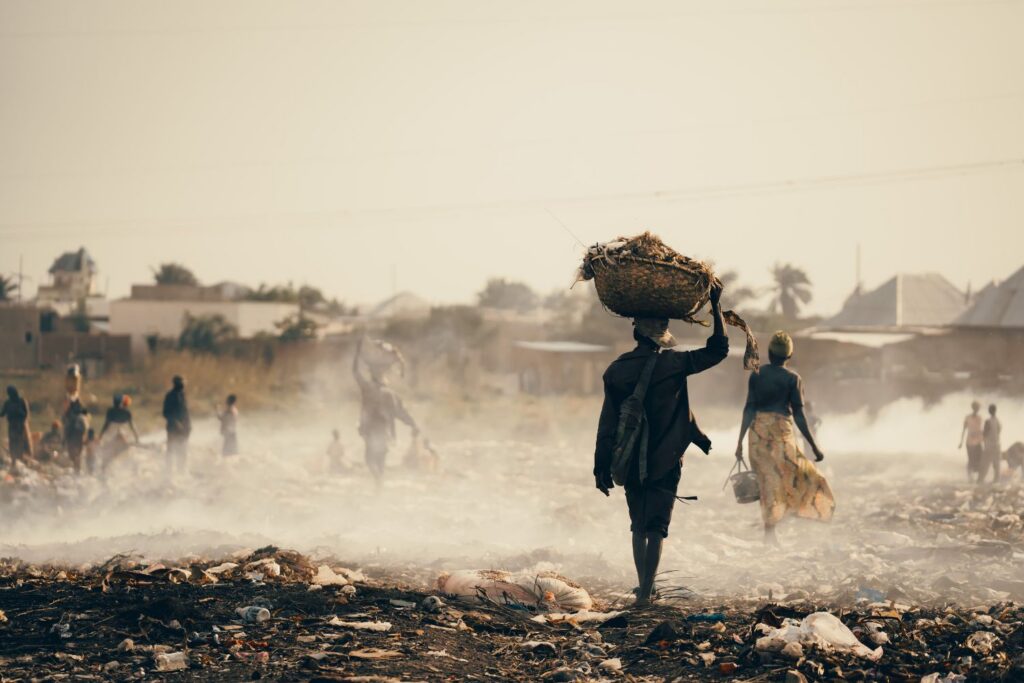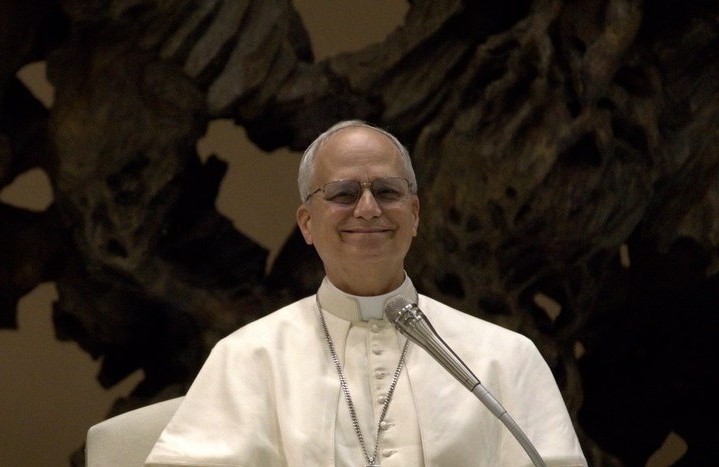
“Here I would like to thank those ‘pioneers’ who, through their courageous efforts, first denounced the ills of this land and brought attention to the obscured and denied reality of its poisoning: I am thinking in particular of members of environmental associations.” This is one of the most important, and even surprising, passages from the speech of Pope Leo XIV in Acerra, on his visit to the“Land of Fires,” “a deadly concentration of dark interests and indifference to the common good, which has poisoned the natural and social environment,” Prevost calls it.
Listening to him in the large Calipari Square are more than 15,000, including some of those “pioneers.” Like Raffaele Del Giudice, today president ofAto Napoli 1, the Authority for the integrated management of urban waste of 9 Neapolitan municipalities, including the capital, but in the most dramatic years for this land director of Legambiente Campania, the association that in 2003 coined the term “Terra dei fuochi”: “I was the enemy because I had damaged the image of the territory. It was a wound that the Pope now heals with his words, thanking our efforts.”
Ecomafia investigations.
This is the reflection also made by another of those “pioneers,” the attorney general of Naples, Aldo Policastro, the protagonist of many investigations into ecomafias that often started precisely from the complaints of environmental associations. “I was strongly struck by the grateful recognition of the‘stubborn resistance,’ the ‘pioneers,’ first and foremost the environmental associations, too often neglected: a tribute to those who had the courage to break the silence when everything was pushing to deny, to keep silent, to turn away.”
But the magistrate, who is still very committed to environmental protection, particularly against illegal construction, also wants to emphasize another reflection of the Pope. “The denunciation that a model of growth that produces waste, poisons and human waste is not development: it is loss of health, of dignity, of the future. Stronger still is the call to individualism, consumerism and the ‘technocratic paradigm’ with their bring of conflicts for control of resources and progressive destruction of the Common Home.” For Prevost requires “a less individualistic economy, a less consumerist system. How much waste, how much waste, how much poison has come from a growth model that has as if bewitched us, leaving us sicker and poorer. So let us learn to be rich differently: more attentive to relationships, more intent on valuing the common good, more attached to the territory, more grateful in welcoming and integrating those who come to live with us.”
The race to hoard resources
“Global” issues, not just local, not just of this land between the provinces of Naples and Caserta. Pope Leo recalls Pope Francis, who in the Encyclical Laudato si’, published on May 24, 2015, called for “a resistance in the face of the advance of the technocratic paradigm.” A paradigm that, Prevost warned, “still presents itself today as a winner: it is at the origin of the multiplication of conflicts, behind which is the race to hoard resources; we see it resisting every time those with political and institutional responsibilities are too weak toward those who are strong; we find it active in technological development that aims at the dizzying profits of the few and is blind before people, their work and their future.” Pope Leo speaks to the world after descending into the pain of this land by meeting in the cathedral with 300 mothers of the little victims of the environmental disaster.
“I have come first and foremost to gather the tears of those who have lost loved ones, killed by environmental pollution procured by unscrupulous individuals and organizations, who for too long have been allowed to act with impunity.” But his is not only a weeping, a pity. But also a thanksgiving and a spur. “We suffer for the devastation that has compromised a wonderful ecosystem, places, stories and memories. Faced with this reality there can be two attitudes: indifference or responsibility. You have chosen responsibility and, with God’s help, have begun a journey of commitment and pursuit of justice.”
The extraordinary commissioner
Also listening to the Pope is General Giuseppe Vadalà, extraordinary commissioner for the “Terra dei fuochi.” For the senior officer of the Carabinieri forestry police, this is yet another difficult mission. In 2017 he was tasked with securing 81 landfills throughout Italy for which the EU condemnation was triggered in 2014, which immediately cost us 40 million euros and 42.8 million for each six-month delay in implementing the necessary measures. Mission completed and now it is the turn of the “Terra dei fuochi,” again after an intervention by Europe, the condemnation of the Court of Human Rights on January 31, 2025.
After one year already there are important results: 3,349 tons of waste removed and started and recovery/disposal, 418 waste sites surveyed as priority, 80 sites upgraded with waste removal, with an allocation of 28 million euros.
A new covenant is needed
Another 101 million allocated for ongoing operations on 32 large sites, 10 million for characterization and analysis. And an additional 200 for remediation or securing. But it is not enough. What is needed, is the Pope’s appeal, is“a new pact” that “will not only counter and unhinge criminal alliances, but positively link and multiply the best forces and great ideas that are already in your hearts.” But, he insists, “it is necessary to watch over the health of creation as one watches over the front door, rejecting temptations of power and enrichment related to practices that pollute the earth, water, air and coexistence.” What is needed, then, is “an ‘army’ of peace that stands up and heals the wounds of this land and its communities. No longer fire that destroys, but fire that revives and warms, the fire of the Spirit that ignites the hearts and minds of thousands and thousands of men and women, children and the elderly and inspires care, consolation, attention, true love.”
And he closes, again surprisingly, with a reference to Roma communities. “The name ‘land of fires’ refers to the fires lit on the edges of cities, sometimes by rejected and marginalized minorities of brothers and sisters of whom few have knowledge and esteem. Marginalization always produces insecurity: the way up is to counter marginalization, not the marginalized; it is to break the whole chain, not just hit the last link.” Words that some people will not like.